The anti-Turkish liturgy of Żółkiew in Jan III’s family tradition
The anti-Turkish liturgy of Żółkiew in Jan III’s family tradition - Photo gallery
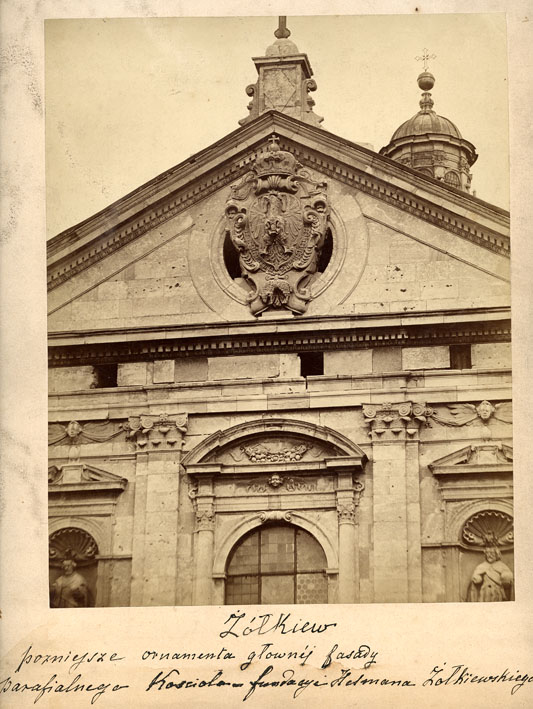
The anti-Turkish liturgy of Żółkiew in Jan III’s family tradition - Photo gallery
Jan III is connected to the military successes in the war against the Enemy from the East by his political image, and most importantly, historical memory. The special place the war against the Turks and the Tatars had in the royal propaganda was also partially caused by the inherited family traditions, which the king demonstrated publicly, but also his own beliefs, which he professed in private.
The family tradition of the liturgy funded by Stanisław Żółkiewski and his wife, Regina in 1620s was a part of the king’s piety and religiousness. The legacy of the Grand Crown Hetman Żółkiewski – and later on his wife’s – after his death in the Battle of Cecora in 1620 shaped the liturgy in the Żółkiew church, introducing an extensive ideological programme, concentrating on the fight against the Turks and Tatars. In the Mass intentions they were considered not only the enemies of the Catholic faith and the Holy Cross, but also as the enemies of the Commonwealth itself. This element was greatly emphasised by a votive Mass of Stanisław Żółkiewski in the anniversary of his victories over the Tatar forces near the Udycz River. The programme was very rich, due to the fact that the entire Mass was sung, and ended with the triumphant “Te Deum”. The choice of the intention is not without its significance to the idea – the Mass of the Holy Spirit, selected by Żółkiewski, was often also connected with state ceremonies, more specifically with the beginning of the Sejm proceedings. The ideological programme of the church in Żółkiew was then expanded upon by the foundations of Regina Żółkiewska, who, as a hetman’s widow, established a liturgy in 1621 for the soul of her late husband and everyone else who fought for the Faith against the Turks or Tatars. During the Mass people also prayed for the souls of those who died in Turkish or Tatar captivity. The liturgy had a solemn character, the mass was supposed to be sung and accompanied with the music, and ringing of the bells, with a catafalque displayed in the nave, namely all the characteristics of a solemn funeral Mass.
The legacies of Regina Żółkiewska were, however, more than just family intentions and did in fact concern things other than the events in which her late husband participated. Apart from the sung funeral Mass she added a read Mass, also celebrated on every Friday, in the intention of those “who suffer in the pagan prisons”. The intention was not only praying so that the prisoners would be released, but also saving them from the temptation of converting to Islam and joining the ranks of the Turks.
Translation: Lingua Lab

Featured articles
-
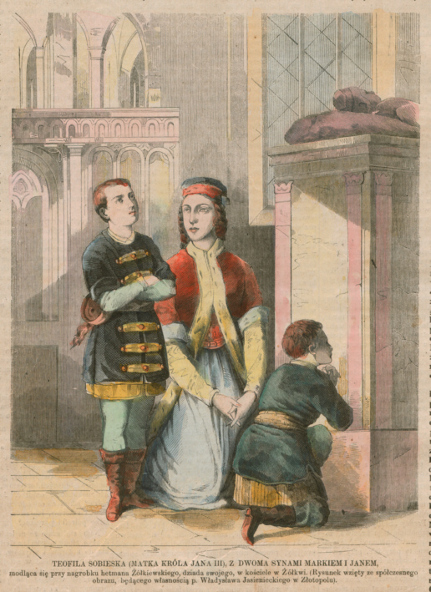
Teofila Sobieska with her sons at the grave of Stanisław Żółkiewski
The Sobieski royal family earnestly hated the Turks and the Tatars and never ceased to worship Hetman Stanisław Żółkiewski who tragically fell in the Battle of Cecora in 1620. The widowed wife of the heroic commander, Regina née Herburt, bought back his m
-
The Żółkiew synagogue
The synagogue in Żółkiew is one of the most beautiful Jewish temples in the world. A fortified building, whose basic form is of the Renaissance style, enriched with Baroque touches, it was supposed to serve as a refuge for the local qahal, should the Coss

-
Not only War and Diplomacy, or Trade Between the Commonwealth and Turkey
In the 80s of the 20th century, we witnessed a sudden revival of individual Polish-Turkish trade on a scale not seen in modern times. It is true that instead of patterned fabrics, carpets and weapons, on the Vistula River appeared jeans and leather produc