Monument trees in Wilanów
Monument trees in Wilanów - Photo gallery
Monument trees in Wilanów
Monument trees in Wilanów - Photo gallery
Preliminary phenological analysis of monument trees
One of the parts of the project “Social education in the conflict between urbanisation and ecology at the Wilanów Palace Museum” was the study of monumental trees growing in the gardens of the Museum of King Jan III’s Palace at Wilanów. The museum, as the guardian of historical properties, takes care of both cultural and natural monuments.
A natural monument
A natural monument may be considered – according to the statutory definition – as individual creations of living and inanimate nature or their clusters of special natural, scientific, cultural, historical or landscape value and characterised by individual features that distinguish them from other creations, impressive trees, shrubs and species native or foreign, springs, waterfalls, outcroppings, rocks, ravines, erratic boulders and caves.
The current legislation does not specify legally binding “threshold sizes” for monument trees, instead adopting the criterion of “particular value”. In practice, trees or shrubs that stand out due to their age or size among trees and shrubs of the same species occurring in the immediate vicinity, or individuals that reach sizes rarely seen in the region or country, are considered natural monuments. Trees with unique natural value, special cultural, scientific and social value or constituting a characteristic element of cultural landscapes also become natural monuments.
When describing monument trees, we also describe the most valuable, largest and oldest trees, i.e. unique, exceptional, protected as an element of the natural value of the garden ecosystem Museum of King Jan III’s Palace at Wilanów.
In the case of the gardens of the Museum of King Jan III’s Palace at Wilanów, trees and bushes constitute an invaluable element of the cultural landscape and are inextricably linked with the historical assumptions of these gardens.
Research methodology
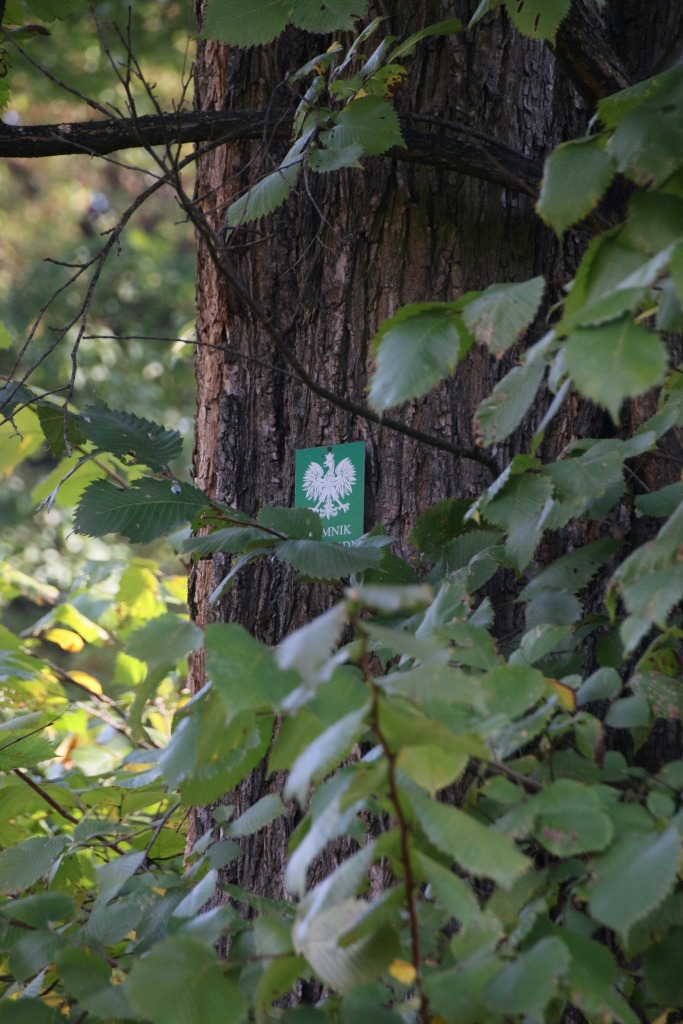
To make a preliminary inventory of monument trees, researchers looked at trees in nature that meet the conditions of natural monuments. Their location was described, the “natural monument” sign was checked, and each tree was identified in terms of genus, species and, for some individuals, variety. During the inventory work, photographic documentation was also made.
Wilanów monument trees
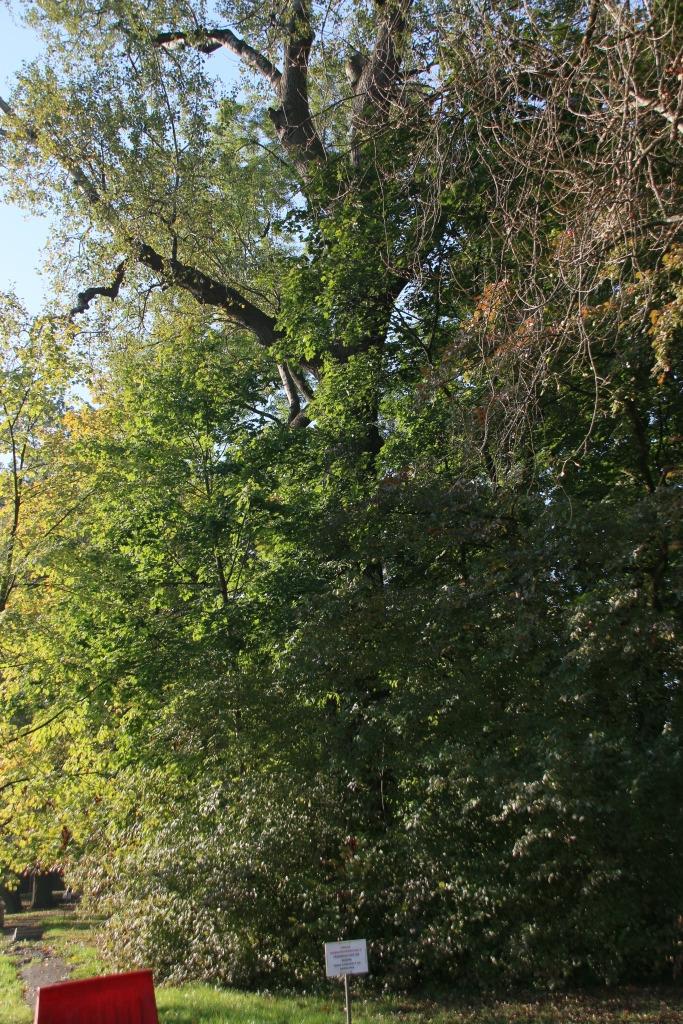
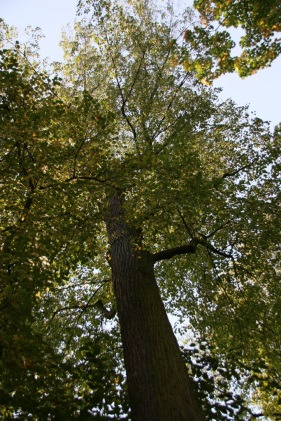
In the gardens of the Jan III Palace Museum at Wilanów, 28 monument trees were inventoried, belonging to 6 types: oak (Quercus sp.), hornbeam (Carpinus sp.), linden (Tilia sp.), alder (Alnus sp.), poplar (Populus sp.), and elm (Ulmus sp.). One of the trees is a dead tree with a completely cut crown. The remaining 27 trees are living trees in good physiological condition.
The project “Social education in the conflict between urbanisation and ecology at the Wilanów Palace Museum” was carried out thanks to the support provided by Iceland, Liechtenstein and Norway under the Financial Mechanism of the European Economic Area.
MORE ABOUT THE PROJECT >>HERE.
MORE ABOUT SCIENTIFIC RESEARCH CONDUCTED UNDER THE PROJECT >>HERE.